
Under Quiet Skies and Hostile Heavens: Rest, Rival Altars, and the Strength of Seeking in 2 Chronicles 14
- Pr Enos Mwakalindile
- May 2
- 9 min read

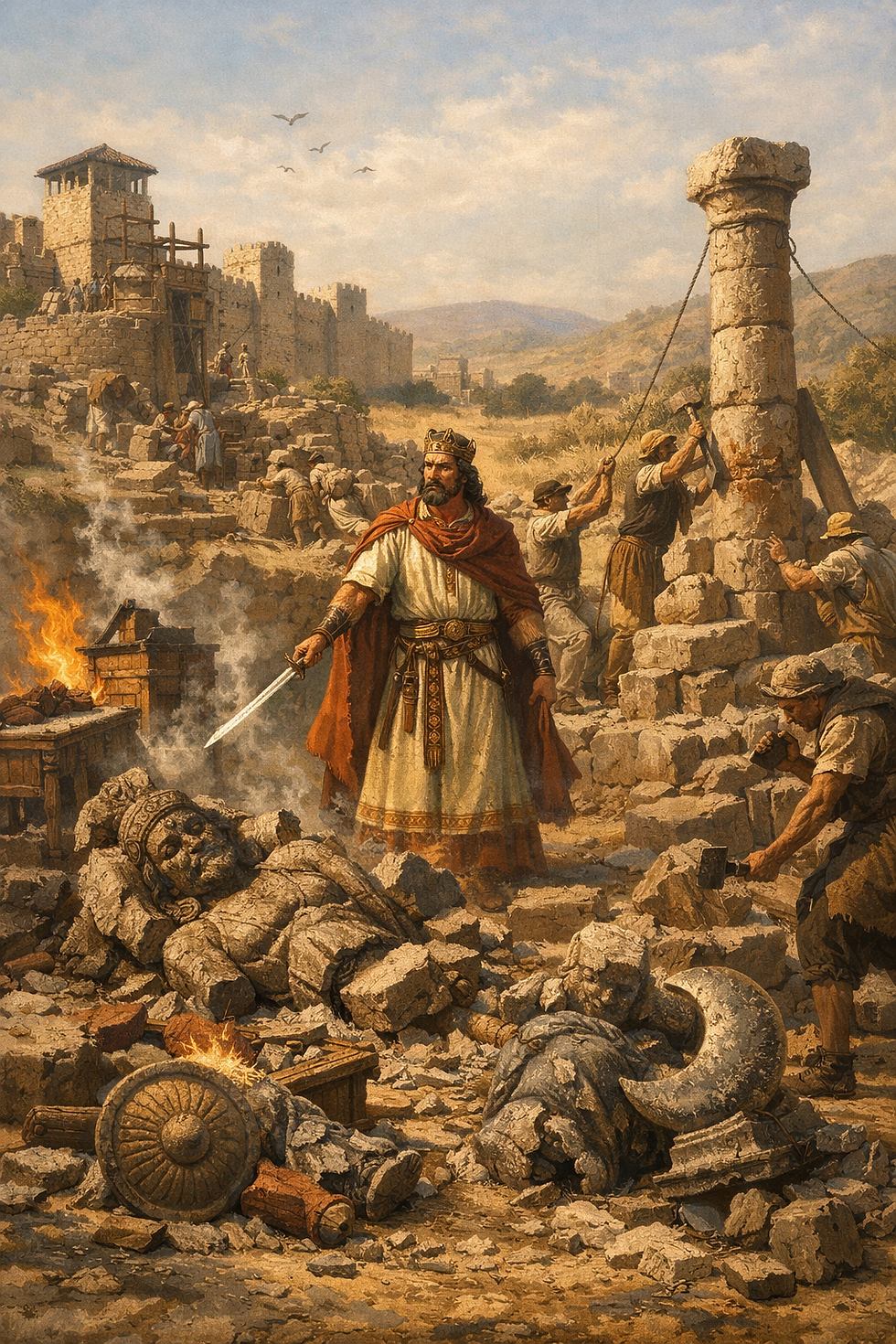
When the land grows quiet, the heart is tested.Peace can become sleep, or it can become prayer.In Asa’s early days, rest is not a cushion for pride but a gift for repair. The silence after war becomes a summons to tear down false altars, strengthen what is weak, and learn again that Judah’s deepest defense is not stone in the wall but trust in the living God. This is 2 Chronicles 14.
1.0 Introduction
Some tests arrive like thunder. Others arrive like sunlight. We expect to need God when the ground shakes. We do not always expect to need Him when the land is still.
That is the searching wisdom of 2 Chronicles 14. Asa inherits a kingdom with room to breathe. The land has rest. Cities can be strengthened. Worship can be repaired. Yet the chapter does not let peace become sentimental. Quiet days are not an intermission from faith. They are the workshop of faith. What Asa does in rest prepares Judah for what Judah must face in war.
This text is about borrowed peace becoming practiced trust.
The chapter teaches that God gives rest not for spiritual sleep but for covenant renewal. And when the enemy comes, the people discover whether their confidence rests in towers, troops, and numbers, or in the name of the LORD (Ps 20:7).
2.0 Historical and Literary Context of 2 Chronicles 14
Second Chronicles 14 opens Asa’s reign after the brief rule of Abijah. In Chronicles, kings are measured not first by brilliance, expansion, or diplomacy, but by whether they seek the LORD, humble themselves, and guard true worship (2 Chr 7:14; 12:6–7, 14; 15:2; 16:9; 17:3–6; 29:2–3). The temple stands behind that whole evaluation even when it is not named in every verse. Judah’s life is meant to be ordered around the presence of God (2 Chr 6:18–21; 7:12–16; 29:20–24).
The Chronicler is writing for a people who know collapse, exile, and the ache of a diminished future (2 Chr 36:15–21, 22–23). So he retells Judah’s history as theological memory, showing how judgment came through unfaithfulness and how hope survives through repentance, prayer, and return (2 Chr 7:14; 12:6–7; 30:6–9; 36:22–23). He is not merely asking, “What happened?” but “How does a wounded people live before God again?” In Asa’s early reign, the answer begins with reform, obedience, and dependence.
The chapter also carries a wider biblical horizon. The invading force is identified with Cush (2 Chr 14:9), the world south of Egypt along the upper Nile, a region associated in Scripture with military reach and political significance (Isa 18:1–2; Jer 46:9; Ezek 30:4–5). So the Chronicler is placing Judah before a real and formidable southern threat. Asa’s tearing down of foreign altars is therefore not only moral cleanup. In the Bible, idolatry is misdirected allegiance: the nations serve their gods, but Israel belongs to the LORD alone (Exod 20:3–5; Deut 4:19–20; Ps 82). Asa’s reform renounces rival spiritual loyalties and recalls Judah to the Most High, not as one option among many, but as the only true God (Deut 32:16–17; Ps 96:4–5).

3.0 Walking Through the Text
3.1 When Peace Is Given for Purging (2 Chr 14:1–5)
The chapter opens with rest. That phrase is repeated because it matters: the land is quiet because “the LORD had given him rest” (2 Chr 14:6). Peace is not self-made. It is received (2 Chr 14:6–7; cf. Deut 12:10).
Asa does not waste it. He removes foreign altars, high places, pillars, and Asherim (2 Chr 14:3; cf. Deut 16:21–22). The verbs are sharp and public. He does not merely dislike corrupt worship; he dismantles it. Then he commands Judah to seek the LORD and obey His law (2 Chr 14:4).
This is classic Chronicles theology. Reform is visible. Loyalty to God is not a private mood. It reaches shrines, habits, symbols, and public life (2 Chr 15:8–15; 17:3–6; 29:3–11; 31:1). And the divine-council backdrop sharpens the point: false worship is not harmless symbolism. It is covenant treason. To bow before other gods is to place Judah back under powers from which the LORD had set His people apart (Deut 29:25–26; 32:16–17; Ps 82:1–8). Asa’s reform is therefore both pastoral and polemical. He is not only clearing religious clutter; he is reclaiming Judah’s allegiance for the God who rules heaven and earth (Exod 15:11; Deut 10:17; Ps 95:3; 96:4–5).

3.2 When Rest Becomes Readiness (2 Chr 14:6–8)
Asa builds fortified cities while the land is at rest. This is not unbelief. It is stewardship. Scripture never tells God’s people to despise wise preparation. Noah builds an ark (Gen 6:13–22). Nehemiah rebuilds a wall (Neh 2:17–18; 4:6–9). Wisdom prepares, but faith refuses to worship what it has built.
The order matters. Asa seeks the LORD, removes false worship, and then strengthens the cities. He does not treat fortifications as his true salvation. He builds within God’s gift, not against it. That is why the chapter avoids both passivity and self-reliance. Judah’s safety is from the LORD, yet Judah is still called to act responsibly.
Peace, then, is not merely relief. It is training space, a God-given season in which obedience can take root before testing comes (2 Chr 14:6–7; cf. Deut 8:2). Many people squander quiet seasons on comfort alone. Asa turns quietness into readiness.
3.3 When Vast Numbers Meet a Kneeling King (2 Chr 14:9–12)
Then the stillness breaks. Zerah the Cushite comes with a vast army and chariots. The numbers are meant to feel heavy. Judah is outmatched. The walls that seemed strong a moment ago now look painfully small.
The social-geographical detail matters. “Cushite” points toward the Upper Nile world south of Egypt, a region remembered in Scripture as a people of stature, military presence, and far-reaching significance (Isa 18:1–2; Jer 46:9; Nah 3:9). The term may carry both ethnic and regional force, and the exact identity of Zerah remains uncertain; but the biblical portrait is clear enough that Judah is facing a serious southern threat (2 Chr 14:9). He may represent a Nubian-associated southern power, perhaps linked in some way to wider Egyptian military networks. The Chronicler does not pause to solve that question. His point is simpler and sharper: Judah is facing a threat that is both real and intimidating, a force from beyond its small hill-country world.
Here the center of the chapter comes into view. Asa cries out: “LORD, there is none like you to help, between the mighty and the weak” (2 Chr 14:11). He confesses Judah’s powerlessness and anchors hope in God’s name.
This prayer does more than request victory. It unmasks the real issue. Human beings constantly imagine that visible strength is ultimate reality. Asa refuses that illusion. He does not deny the size of the enemy. He denies that the enemy has the last word.
The Bible repeatedly tells this story: the sea before Moses (Exod 14:13–14), Midian before Gideon (Judg 7:2, 7), Goliath before David (1 Sam 17:45–47), Assyria before Hezekiah (2 Chr 32:7–8, 20–22). God delights to show that salvation does not belong to the strong as such, but to the LORD (1 Sam 17:47; Isa 31:1–3). Asa’s strength is not military genius. It is that he knows how to kneel.

3.4 When the Lord Strikes and the Fear of God Falls (2 Chr 14:12–15)
The answer is immediate: “So the LORD defeated the Ethiopians before Asa and before Judah” (2 Chr 14:12). The Chronicler will not let us misread the battle. Judah fights, but the decisive actor is God.
The enemy flees. Cities around Gerar collapse under “the terror of the LORD” (2 Chr 14:14). That phrase matters. This is more than military panic. It is the revelation of divine kingship, echoing earlier moments when God’s dread fell on the nations before His people (Exod 15:14–16; Josh 2:9–11). The God whom Judah sought in reform now makes His supremacy known in conflict.
That is why the Cushite setting matters theologically. Judah is not merely surviving a local skirmish. The LORD is showing Himself supreme over a wider world of nations, routes, armies, and powers. A people from the southern Nile corridor, associated with long-distance reach and military significance, becomes the stage on which the God of Judah displays that He is not a local mountain deity. He is Lord beyond Judah, beyond Egypt’s shadow, beyond every intimidating horizon.
The spoil is abundant, but the deeper point is theological. The LORD is not a tribal deity struggling for survival among peers. He is the sovereign Judge before whom hostile nations and their gods are nothing (Deut 10:17; 1 Kgs 8:23; Ps 82:1–8; 96:4–5; Isa 40:15–18). The victory dramatizes what Israel’s worship already confesses: “the LORD is great… for all the gods of the peoples are idols, but the LORD made the heavens” (Ps 96:4–5).
Still, the chapter ends with quiet warning. Victory is real, but one victory is not a finished life. Asa has trusted well here. Later he will lean on human alliance rather than divine help (2 Chr 16:7–9). Early faith must mature into enduring faith.

4.0 Theological Reflection
4.1 Seeking the LORD Is the Great Dividing Line
In Chronicles, this is the central question: does the king seek the LORD? Asa does here. Seeking means more than private devotion. It means covenant loyalty, the removal of rival worship, obedience to God’s word, and dependence in crisis (2 Chr 14:4, 7, 11; 15:2, 12–15; 16:9).
4.2 Idolatry Is Spiritual Allegiance, Not Mere Ritual Error
Asa’s reforms should be read against the Bible’s wider vision of the nations and their gods. Scripture portrays idolatry as participation in a rebellious spiritual order that distorts human life and steals worship from the Creator (Deut 32:16–17; Ps 82; 106:35–37; 1 Cor 10:20–21). So reform is not cosmetic. It is liberation from false rule.
4.3 God Gives Rest So Worship May Be Repaired
Rest in this chapter is covenantal. It is not bare comfort. It is God-given space for reordering life under His reign (Deut 12:10; Josh 21:44; 2 Chr 14:6–7; Matt 11:28–30). Quiet seasons are holy opportunities.
4.4 The True Son of David Will Perfect What Asa Begins
Asa offers a glimpse of faithful kingship, but only a glimpse. He can pray, reform, and win; he cannot remain wholly steady (2 Chr 16:7–10). Chronicles trains hope beyond Asa toward the greater Son of David, who will defeat the hostile powers, cleanse worship, and bring true peace not by wavering faith but by perfect obedience (Ps 2; Isa 9:6–7; Zech 9:9–10; Col 2:15; Eph 2:14).
5.0 Life Application
Use seasons of peace to repair what drift has damaged.
Tear down tolerated idols, not just obvious ones: status, fear, control, appetite, acclaim.
Build wisely, but never lean your soul on what your hands can make.
In crisis, tell the truth before God about your weakness.
Remember that spiritual warfare is often about allegiance before it is about emotion.
Let public obedience match private sincerity.
After every mercy, return quickly to worship before blessing turns into pride.
6.0 Reflection Questions
What has this season of relative quiet revealed about my heart?
Which rival loyalties still stand like altars in my life?
Where am I trusting visible strength more than the name of the LORD?
What wise preparation is God calling me to make without idolizing it?
In what present battle do I need to kneel before I act?
7.0 Response Prayer
Lord of heaven and earth,when You give rest, keep us from wasting it.Tear down the altars we excuse,and free us from loyalties that do not belong to You.
When strong enemies rise and our numbers feel small,teach us to pray as Asa prayed.Strip away our pride, our trust in visible strength,and make us steady in Your name.
Cleanse our worship.Strengthen our walls without hardening our hearts.And lead us by the greater Son of David,who has overcome the powers and brought us near in peace. Amen.
8.0 Window into What Comes Next
But battle-won peace is not the end of Asa’s story. In the next chapter, the word of the Lord will press deeper into the king’s heart and Judah’s life. Victory must become covenant renewal. The land has been quieted, but now the question sharpens: will Asa keep seeking the God who helped him?
9.0 Annotated Bibliography
Dillard, Raymond B. 2 Chronicles. Word Biblical Commentary 15. Waco, TX: Word, 1987. A careful exegetical commentary with strong attention to structure, theology, and the Chronicler’s literary shaping.
Heiser, Michael S. The Unseen Realm: Recovering the Supernatural Worldview of the Bible. Bellingham, WA: Lexham Press, 2015. Helpful for framing the biblical logic of rival gods, the nations, and spiritual rebellion behind idolatry, when used with textual restraint.
Japhet, Sara. I & II Chronicles: A Commentary. Louisville: Westminster John Knox, 1993. A major scholarly treatment of Chronicles, especially valuable for the book’s themes, rhetoric, and postexilic theological vision.
Jonker, Louis C. 1 and 2 Chronicles. Grand Rapids: Baker Books, 2013. Accessible and theologically sensitive, with useful insight into how Chronicles speaks to identity, memory, and restoration.
Selman, Martin J. 2 Chronicles. Downers Grove, IL: InterVarsity Press, 1994. Balanced and pastoral, especially strong on the Chronicler’s theology of reform, worship, and divine help.
Sailhamer, John. First and Second Chronicles. Chicago: Moody Press, 1983. A concise theological reading that helpfully highlights covenant, temple, Davidic hope, and the logic of obedience and blessing.


Comments